
AnonymousSign in
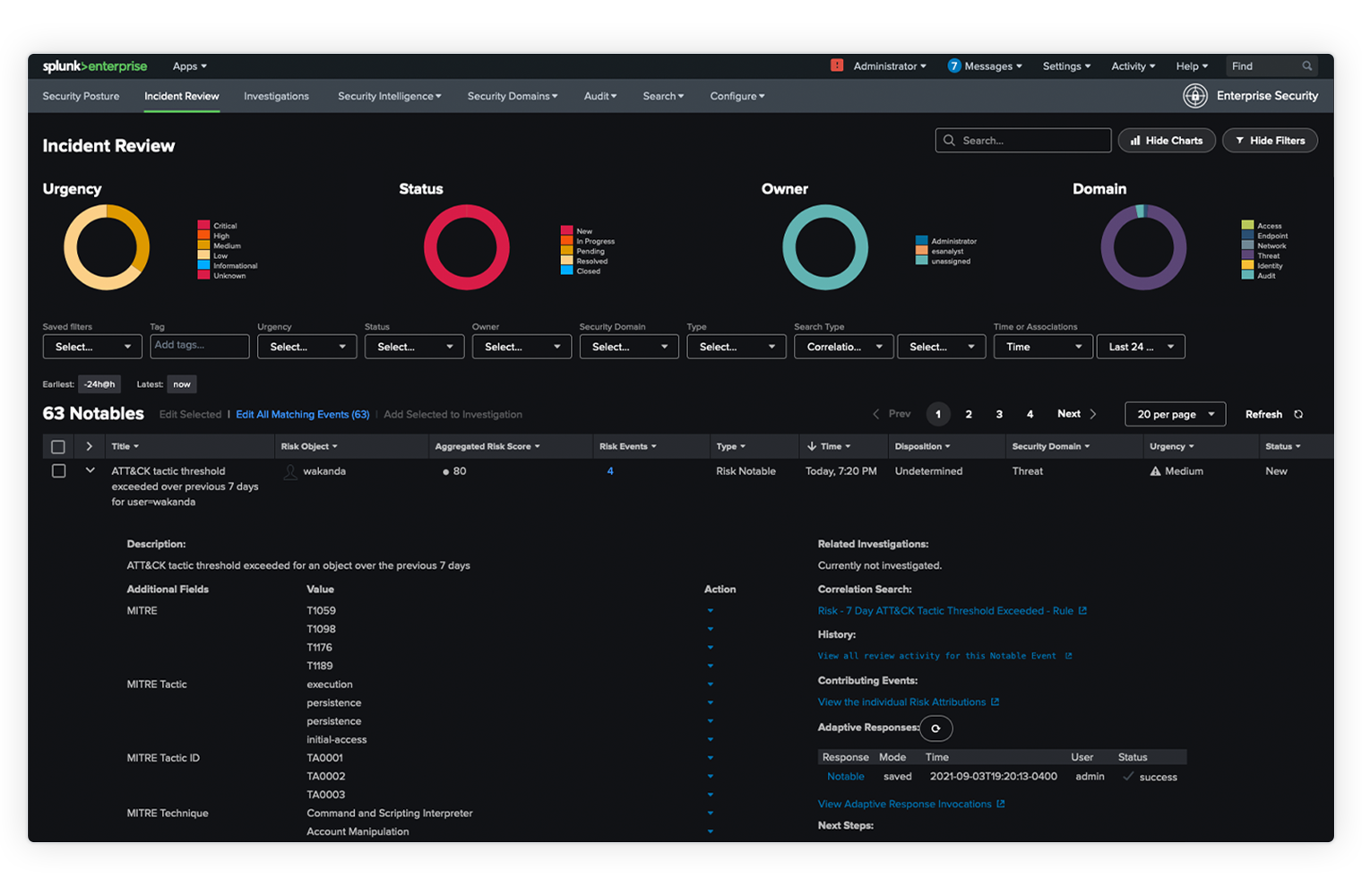
User and entity behavior analytics against unknown threats.
by Splunk · splunk.com · source ↗
Cross-site scripting (XSS) vulnerability in the auto-complete feature in Splunk Enterprise before 6.0.4 allows remote authenticated users to inject arbitrary web script or HTML via a CSV file.
Cross-site scripting (XSS) vulnerability in Splunk Web in Splunk Enterprise 6.1.x before 6.1.3 allows remote attackers to inject arbitrary web script or HTML via the Referer HTTP header.
Directory traversal vulnerability in (1) Splunk Web or the (2) Splunkd HTTP Server in Splunk Enterprise 6.1.x before 6.1.3 allows remote authenticated users to read arbitrary files via a .. (dot dot) …
The "runshellscript echo.sh" script in Splunk before 5.0.5 allows remote authenticated users to execute arbitrary commands via a crafted string. NOTE: this issue was SPLIT from CVE-2013-6771 per ADT2…
Directory traversal vulnerability in the collect script in Splunk before 5.0.5 allows remote attackers to execute arbitrary commands via a .. (dot dot) in the file parameter. NOTE: this issue was SPL…
Cross-site scripting (XSS) vulnerability in Splunk Web in Splunk before 5.0.8 allows remote attackers to inject arbitrary web script or HTML via unspecified vectors.
Cross-site scripting (XSS) vulnerability in Splunk Web in Splunk 5.0.0 through 5.0.2 allows remote attackers to inject arbitrary web script or HTML via unspecified vectors.
Cross-site scripting (XSS) vulnerability in Splunk Web in Splunk before 5.0.6 allows remote attackers to inject arbitrary web script or HTML via unspecified vectors.
Cross-site scripting (XSS) vulnerability in Splunk Web in Splunk 4.3.0 through 4.3.5 allows remote attackers to inject arbitrary web script or HTML via unspecified vectors.
Cross-site scripting (XSS) vulnerability in Splunk 4.0 through 4.3 allows remote attackers to inject arbitrary web script or HTML via unknown vectors.
Cross-site scripting (XSS) vulnerability in Splunk Web in Splunk 4.2.x before 4.2.5 allows remote attackers to inject arbitrary web script or HTML via unspecified vectors, aka SPL-44614.
Splunk 4.2.5 and earlier, when a Free license is selected, enables potentially undesirable functionality within an environment that intentionally does not support authentication, which allows remote a…
Multiple directory traversal vulnerabilities in Splunk 4.x before 4.2.5 allow remote authenticated users to read arbitrary files via a .. (dot dot) in a URI to (1) Splunk Web or (2) the Splunkd HTTP S…
mappy.py in Splunk Web in Splunk 4.2.x before 4.2.5 does not properly restrict use of the mappy command to access Python classes, which allows remote authenticated administrators to execute arbitrary …
Splunk 4.0.0 through 4.1.4 allows remote attackers to conduct session hijacking attacks and obtain the splunkd session key via vectors related to the SPLUNKD_SESSION_KEY parameter.
The XML parser in Splunk 4.0.0 through 4.1.4 allows remote authenticated users to obtain sensitive information and gain privileges via an XML External Entity (XXE) attack to unknown vectors.
Splunk 4.0 through 4.0.10 and 4.1 through 4.1.1 allows remote authenticated users to obtain sensitive information via HTTP header injection, aka SPL-31066.
Multiple cross-site scripting (XSS) vulnerabilities in Splunk 4.0 through 4.0.10 and 4.1 through 4.1.1 allow remote attackers to inject arbitrary web script or HTML via (1) redirects, aka SPL-31067; (…
Multiple directory traversal vulnerabilities in Splunk 4.0 through 4.0.10 and 4.1 through 4.1.1 allow (1) remote attackers to read arbitrary files, aka SPL-31194; (2) remote authenticated users to mod…
Cross-site scripting (XSS) vulnerability in Splunk 4.0 through 4.1.2, when Internet Explorer is used, allows remote attackers to inject arbitrary web script or HTML via the HTTP Referer in a "404 Not …
No datasheets, whitepapers, case studies, videos, or demos linked yet.